Tuesday, May 1, 2012

Facts of the Philippines and the Church in the Philippines

Slow Down--Don't you know its Blaine's Birthday!

Dear Blaine, Happy birthday. 
I know you really like facts so let me give you a few.  Let me share with you some interesting facts about the Philippines and then about the church in the Philippines. 
Grampy Singing "Happy Birthday" with Grammy
There are over 7,000 islands in the Philippines and there are over 120 different languages spoken.  Tagalog or Filipino and English are both considered national languages.  The language that Grammy and Grampy are learning is Visayan and has the most native speakers and people like to speak it more than Tagalog. 
The total area, or square miles of the Philippines make it about the same size as Oregon where you live.  Oregon has 97,073 square miles and the Philippines has 115,830 square miles.  Well actually you would need to put Oregon and Vermont together to have the same size as the Philippines.
O want to sing Happy Birthday to you four times.
The Philippines has 90,000,000 people and the combined population of Oregon and Vermont is only  4,400,000.  That gives the Philippines 20 times more people here than where you live.  There are people everywhere here.  No matter where you go here there are lots of people living.  In the mountains, along the beaches or in the forest, people everywhere.

Now some facts about the church here.  The church started missionary work here in 1962.  The church just celebrated 50 years in the Philippines.  When Grampy was here in 1971, there was only one mission with about 200 missionaries and now there are 14 missions with about 150 missionaries each.  That makes about 2100 missionaries or about 10 times more than when Grampy was here serving his mission.  More than half of all the missionaries here come from the Philippines.  Although, we have three sister missionaries that come from interesting places, two from India and one from Pakistan.  Also, when Grampy was here there were about 8,000 members. Now there are over 645,000 members. That’s makes it so the church has grown 80 times since Grampy was here on his mission when he was young.  If the entire world had the same number of members per capita as does the Philippines, the total church membership would be 485,000,000 members. That would make the church 35 times bigger than it is.  Wow!  That is big.  In the past 50 years the Philippines has grown faster than any other country.

In the ocean just east of the Philippines, the Philippine Trench is the 3rd deepest spot on earth.  It is over 34,600 feet deep.  How deep is that?  When you look up in the sky and see jets flying by and leaving the white contrails, they are about 35,000 feet high.  So that is how deep the ocean is here.
So Blaine, it's your birthday.  Hmmmmm.
There have been about 75,000 baptisms in the last 5 years in the Philippines and there are about 114,000 men who hold the Melchizedek Priesthood like you dad.

There are two temples here, one in Manila the capital and one in Cebu close to where we are.

Today in the history was an important day.  It was on this day that in 1896 that Andres Bonifacio y de Castro and others leaders of the underground society met together to overthrough Spanish rule in the Philippines that had been going on for 300 years.  The Philippines was actually liberated from the Spanish two years later in the Spanish American War in 1898. (Wow, that is just how long a mission is!) Your dad can tell you all about the war.  

One reason teaching the gospel of Jesus Christ has been so successful here in the Philippines is  that the people are so humble and have faith in Jesus Christ.  They also pray a lot. Even though most people who are not members pray with memorized prayers, they believe in prayer.  They believe that it is important in their daily life.  When they pass by a church in a bus they say a little prayer.  There is a man who is a Catholic priest that Grammy and Grampy know, he approached the Cebu temple president in a store and asked if he could be taught the gospel.  We will tell you more about this man and his conversion story to the gospel of Jesus Christ later.  But, there are many miracles in his story.  I have met him three times and have heard his conversion story.  On one of the times he was taught one of the lessons, Grammy and Grampy were there.  He was asked to pray and the close of the lesson.  He said an amazingly humble from the heart prayer.  When he finished he apologized for how slow and rough his prayer was and he said that that prayer was the first time in his life he has ever prayed from the heart saying the words he wanted to say.  All of his prayers in his life were memorized.  He is getting baptized this Friday.  We will tell you his full story later.  It is really an amazing story how this man's life was prepared to hear the gospel and how he was kidnapped and put in a prison and he literally had a prison door open the allow his escape.  

Blaine, say your prayers and look for miracles in your life.  There are miracles every day.  Most are small and some are medium and others are big.  Look for them and you will see them.  God loves you.  

Saturday, April 21, 2012

Ian, Food, and Making Things Work

Dear Ian, Happy Birthday, dear son,
Lecheon Baboy-Roast pig. Big time delicacy
Okay, so it isn’t hard to guess what the topic of your birthday blog will be:  of course food. Oh we have run into some interesting stuff, not so much because there is astonishing cuisine here, but because they use and are willing to eat things that in America people would never consider eating except in barrios in big cities where people of foreign cultures gather.

Blood pudding with intestines
It makes you wonder about cultural norms.  Things that are taboo in the mainstream US culture are everyday here.  Things that an American would not bat an eye at would be frowned on here.  It’s so interesting, because neither is intrinsically bad or good.  Our culture has just imbued it with what we come to believe is inherent, natural goodness or badness.  Let’s take for example pig blood.  Now most Americans would just plain blanch at the thought of eating pig blood.  They might even faint if they thought they’d actually have to eat it.  But here, the pig is killed, the blood is collected, the pudding or sausage is made and everyone enjoys it.  And why not?  I guess we have images of vampires, or remnants of our Judeao sensitivity regarding the dietary regulations in the law of Moses, but if you think about it, those have no basis in modern fact, unless you maintain Kosher standards.  The reason we don’t eat pig blood is just that we have been taught it’s gross. But what if it’s NOT gross?  What if it is no more gross that pig muscle, or cow milk?
She is really smiling


The baboy goes really fast
We found your own personal store
I am singing happy birthday


That brings me to the flip side.  Things here that people don’t like, that in the U.S. are normal.  Well I shouldn’t say, “don’t like” I should say, “Don’t get.”  Let’s take for example bread. Filipinos eat lots of bread.  They have these little bakeries on every corner, sometimes several in a block.  They sell all sorts of snacky breads, with maybe some coconut, or a filling.  They even sell loaves of white sandwich bread.  But in their mind, bread is not part of any actual food group.  They will eat a sandwich, but never for a meal.  A meal must include rice, and bread is NOT a valid substitute.  If for example I know that I and a local auxiliary leader will be away from home traveling over lunch time, I cannot pack a lunch that consists of a PB &J and a piece of fruit.  They will eat that, but then will insist on stopping at a road side calderia to order a plastic bag of rice and another of some rice topping.  Bread is for snack only, and meals are hot and they include rice—there is no compromise on that, no matter how far from home and how inconvenient. It seems strange to me that people who claim to have to go without food sometimes for lack of funds will also not consider bread as a real food. But then, I don’t think of pig blood as a real food either.


At the pig meat market
We served this to some branch members, they loved it.
a local favorite-baby squid
Mom learning how to de-bone a milk fish

To market, to market to sell a live pig. Pig snout cut out.

Bar-B-que chicken feet, ummm
Here is my confession E, and maybe if you come to visit while we are here, you can convince me otherwise:  I have yet to try pig blood or balut.  Just can’t do it.  No matter how philosophical I get about the whole thing, no matter how intellectual an argument I present to myself, I just can’t get over the yuck factor.  Gratefully any time we have been offered blood pudding, it had been buffet style and I have not felt obliged to eat it.  Trust me I have eaten things that I would consider almost in the same category, but that one I’ve been able to avoid.
What you might ask have I not avoided? Well, I have eaten pig face, sometimes translated from Visaya into English as pig mask.
At the meat market
Double Banana, very common.
Needless to say there is nothing wasted here.  Everything has a use.  It seems as though that is just how God wants things to be.  Everything gets used.  There is a lot of your spirit here, the spirit of inventiveness.  The Filipino people are so amazingly resourceful.  When there is a need they just create or patch something together to make it work.  The gospel seems to work like that and more.  There is a foundation of happiness.  Making things work through the gospel.  Not forcing but allowing the flow of the gospel to take hold in people’s lives.  We are seeing that happen to a man who was the first district president (like a stake president) in the Tanjay district.  He and his wife have been inactive for about 10 years.  They are beginning to grasp the gospel again in their lives and they are feeling a real sense of love toward their family and are more focused and happier in their lives.  The husband is a district school administrator for the province and his wife is an environmental engineer who works in a city just to the south of us.
Ian, we have loved watching you make things work--as a boy, a teenager, a missionary, a husband.  You have a knack for calmly taking the materials at hand and creating out of them something that will make life easier, more efficient, more pleasant, whether it be food, music, a computer program or a relationship. You are amazingly creative in so many facets, and creativity is an element of your divinity.   
We wish you a happy birthday!  We will see you for your next one. Yippie!

Wednesday, April 18, 2012

Ash, the environment, more community service and young women

Dear Ashleigh,

Happy Birthday!!! Oh my goodness, it seems we’ve known you forever and you have been part of our family all along, but looking back, it’s been not even two years since we officially added you to the ranks of the ever growing, ever improving Cropper clan. And you are for sure part of the improvement. You add richly to our perspective and our strength.


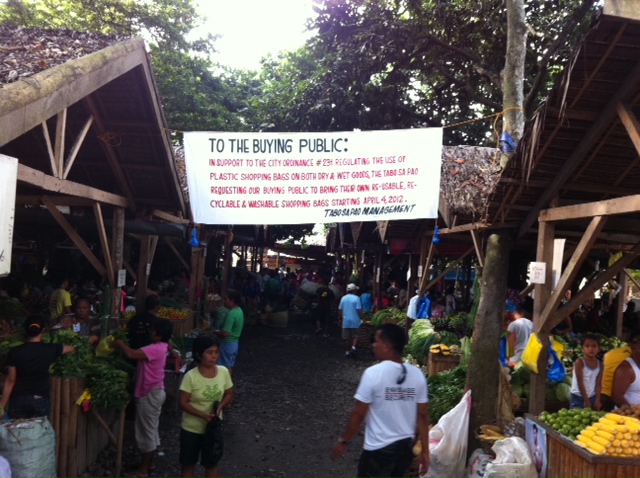
---A New notice in the marketplace---

TO THE BUYING PUBLIC:

In support to the city ordinance #234 regulating the use of plastic shopping bags on both dry & wet goods, the Tabo sa Pao requesting our buyer public to bring their own Re-usable, &Re washable shopping bags starting April 4, 2012. Tabo sa Pao Management

We have been thinking for a long time what the topic of your birthday blog would be—should we pick a person to link you to or a topic that would interest you? We chose the latter, only there are two topics: we chose the environment and young women--two topics close to your heart, one your profession and the other your calling. We thought it would be interesting to give you the Amlan, Negros Oriental, Philippines version of environmental issues, and a vision of Young LDS women and men in our District here. I think it will give you hope.

We see it as hopeful, because at some levels, people here care very much for their environment, and some understand very well the causes and effects of pollution and waste. There are government agencies involved in waste management, recycling, protection of resources, prevention, etc. There are laws and legislation that govern and regulate use of resources. But at the same time, there are two factors that balance against that. One is wide spread corruption.

This country is said to be one of the most corrupt on earth, with corruption defined as political power being used for personal gain. This plays out in many environmental ways, but the most devastating of those is that government officials legislate against using the resources from all lands, under the guise of environmental protection, then they buy up big stretches of protected land, then they ravage those lands themselves, and gain the profits, but of course don’t enforce the laws, so huge stretches of forest are logged and not replanted, mined and not regulated. We are told there are even chain saws with silencers on them so that people can’t tell where the violations are going on. It is far worse than if private land owners were using their land and managing the resources carefully like land owners have done for generations here. The result is, that in places where these government officials have clear cut, there are horrible, fatal land-slides in the mountains, and flooding in the valleys when a typhoon hits, and much greater devastation than would ever have otherwise occurred. It’s tragic.

The corruption in government contribute greatly to the second tragic factor that effects the environment. The people are poor—far more poor than people should be in a country with never ending natural resources—and so they can’t afford the luxury of managing their resources as they might like to. They fish too much from the same waters, and the fish are getting smaller and fewer. They use tons of plastic bags because they are cheap and convenient, but then those show up all over beaches and waterways.


The good news is that on local levels, the people are trying and succeeding in making a difference, and community clean-up efforts are organized, trees are planted, local ordinances are passed and enforced.

The small Municipality of Amlan has a no smoking ordinance! Imagine. There are cities in Europe and America—much more developed and seemingly ahead—that are not this progressive.


There are small areas that are marine protected. No fishing is allowed there. (see also the sign below with the fish drawn on it)

There are agencies that encourage the research and development of job-creating renewable resource industry and agriculture, like goat milk production, and coconut water collection (coconuts are harvested and the meat and shells are used but the water from them, electrolyte-rich though it is, isn’t for the most part being collected)


This is from a week of environmental and community service/clean-up in which our branch's members and the missionaries from our Zone participated. It is called Gawad Kalinga, which means "give care". Look it up on the internet. It is an amazing program that is sweeping across the Philippines and is gaining some real international attention.


There were 75 teams of 15 on each team. We had about 35 people all in all helping from the LDS community and missionaries. The before and afters are pretty groovy. Notice the Mormon Helping Hands vests. YEAH!!


Gotta have music to pump up the volunteers. The band is called Recycles. All their instruments are made from recycled materials. They sounded great.


DreAMLANd. Diversified Resources for an Ecological AMLAN Development. This is our towns logo, as seen on the new fire truck. Pretty clever.


The Rhinosouras Beetle. Eats young coconut buds. Good for the beetle bad for the coconuts. (Dean somehow thought this picture is environmentally linked and wants to include it)


Throw your garbage you get fined and go to jail.


The week after Gawad Kalinga was the District Youth Conference. Here are some of the young women, showing off the decorated flipflops they made. And some others dressed for the social dance night where the theme was "Once Upon A Time". The youth also learned of the Law of Chastity, with I courageously taught in spite of the language barrier--not an easy task if all are on the same language page! They had scripture study each morning with their seminary teachers, workshops on practical skills to improve their lot temporally, and lots of good food and fun. Probably the biggest difference you would notice if you visited a Youth activity here is that the kids don't have the same sense of cool factor as at home. Sure, some are more shy than others, and some are bold, but all seem to be pretty good sports about trying new things and participating. They LOVE to dress up, and costumes are a must. Boys and girls were dressed up in costume for the dance, and then again for the talent show. The girls are showing of the crafts they made--cool decorated flip flops, and wood blocks with sayings. One cool picture is a cute duet in the talent show. All had a lot of good clean fun--not much different than the same event in Provo or Ashland.


The Bouncers.


Thanks to you Ashleigh for your passion about our earth and our environment. Thanks for the work you do in Young Women to change lives and reflect God's love to his daughters. We love you and love to think of the difference you are making in the world and in our family. Happy Birthday!!!